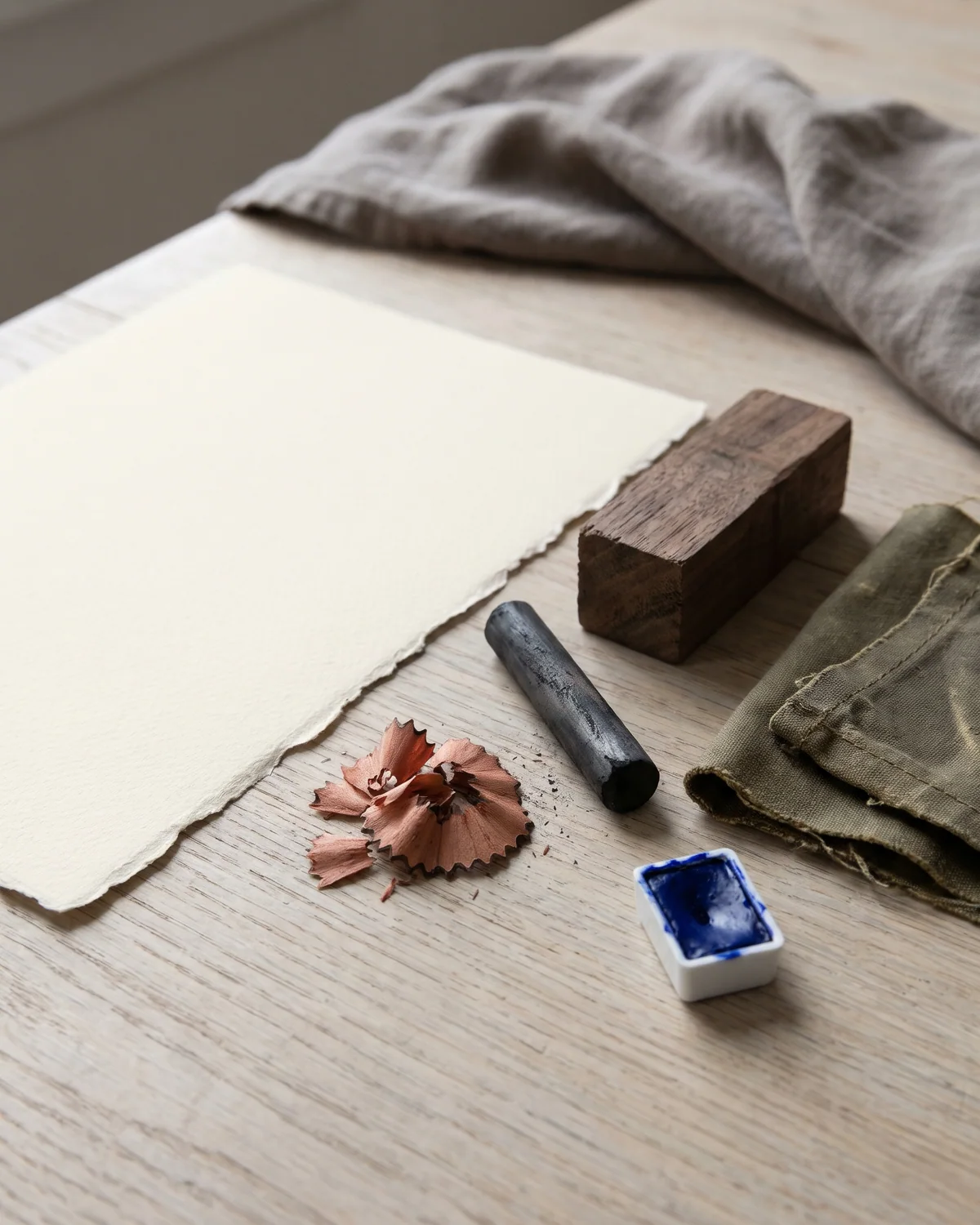
We list materials before opinions. This page explains what the words on our listings mean: why a paper weight matters, what a pigment code tells you, and why we use solid walnut instead of a printed veneer.
Paper
Paper weight in the US is given in pounds: the weight of a ream of 500 sheets at the mill’s parent size. It is an awkward unit, so we always give grams per square meter (gsm) alongside. Heavier paper is thicker, holds more water and buckles less.
Cotton or wood pulp
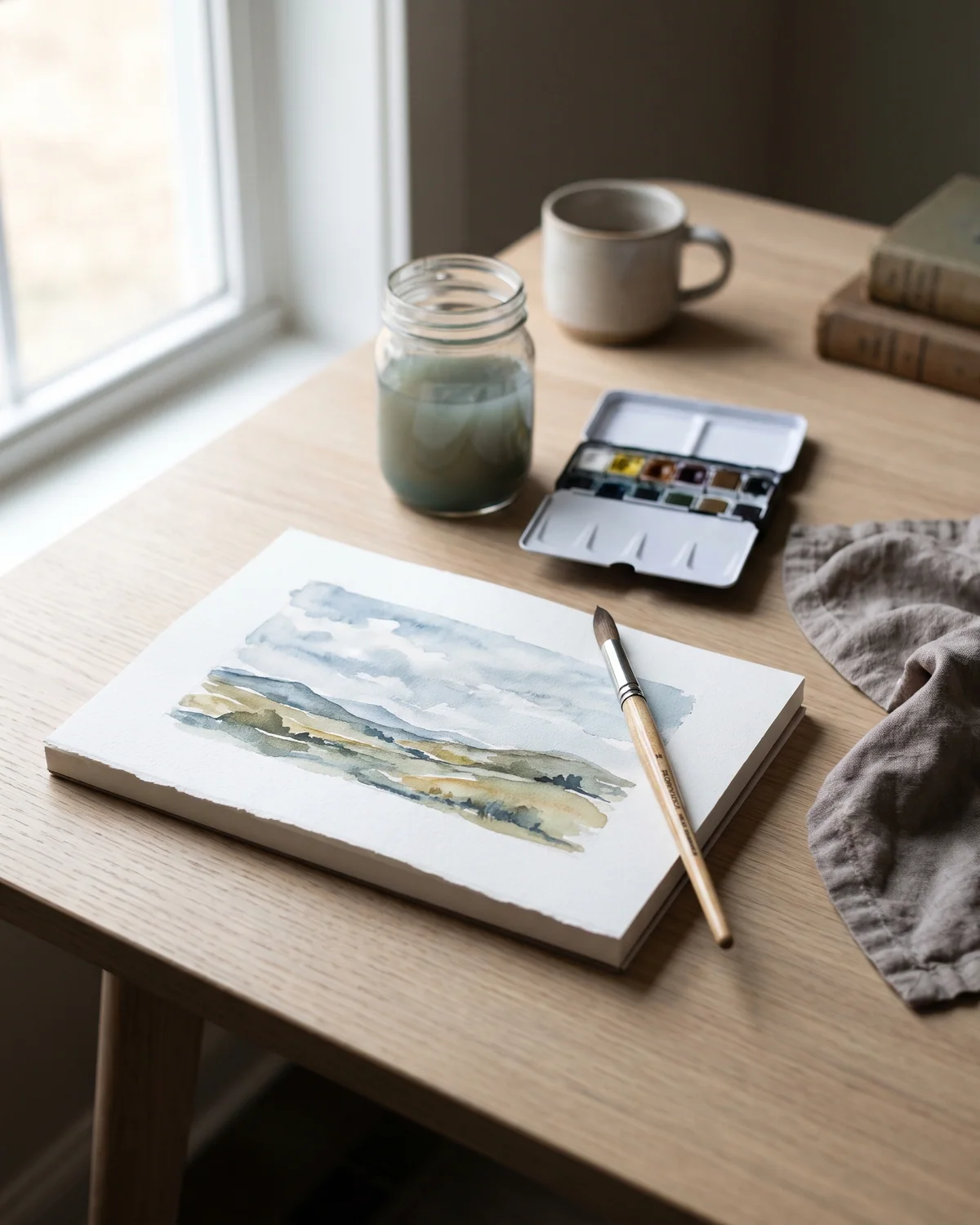
Our watercolor paper is 100 percent cotton. Cotton fibers are long and absorb water evenly, so washes stay workable and dry without hard edges. Wood-pulp paper is fine for graphite, ink and dry media, and it is what our drawing sketchbooks use.
Cold press means the sheet was pressed between textured felts, giving a medium tooth. It is the most versatile surface for watercolor.
Graphite and charcoal
A pencil lead is a mix of graphite and clay, fired. More clay makes a harder, lighter lead (the H grades); more graphite makes a softer, darker one (the B grades). Our pencils use incense cedar barrels, which sharpen cleanly without splintering, and the lead is glued to the wood along its full length. That bond is what stops a dropped pencil breaking into pieces inside the barrel.
Willow charcoal is willow twigs fired slowly in a sealed tin. It is soft and lifts easily. Compressed charcoal is powdered charcoal bound with a little gum into a stick, darker and harder to erase.
A pencil that snaps every time you sharpen it is not cheap. It is just expensive in small pieces.
Pigment
Every paint we sell lists its pigment codes, such as PB29 for ultramarine blue or PBr7 for burnt sienna. The code tells you what is actually in the tube, regardless of the color name on the label. Single-pigment paints mix cleaner than convenience blends, so we use them wherever we can.
- WatercolorPigment bound in gum arabic with a little honey, so pans rewet quickly.
- GouacheA higher pigment load plus chalk, for a matte, opaque finish.
- InkShellac-based India and sepia inks dry water-resistant and can take a wash.
Wood
Boxes, trays and the tabletop easel are solid black walnut from a woodshop in North Carolina. Drawing boards are edge-glued basswood, which is light and stays flat. The field easel and stool are oiled European beech. All our wood is finished in oil or oil and wax, never a thick lacquer, so scratches can be rubbed out and the finish renewed at home.
Canvas and leather
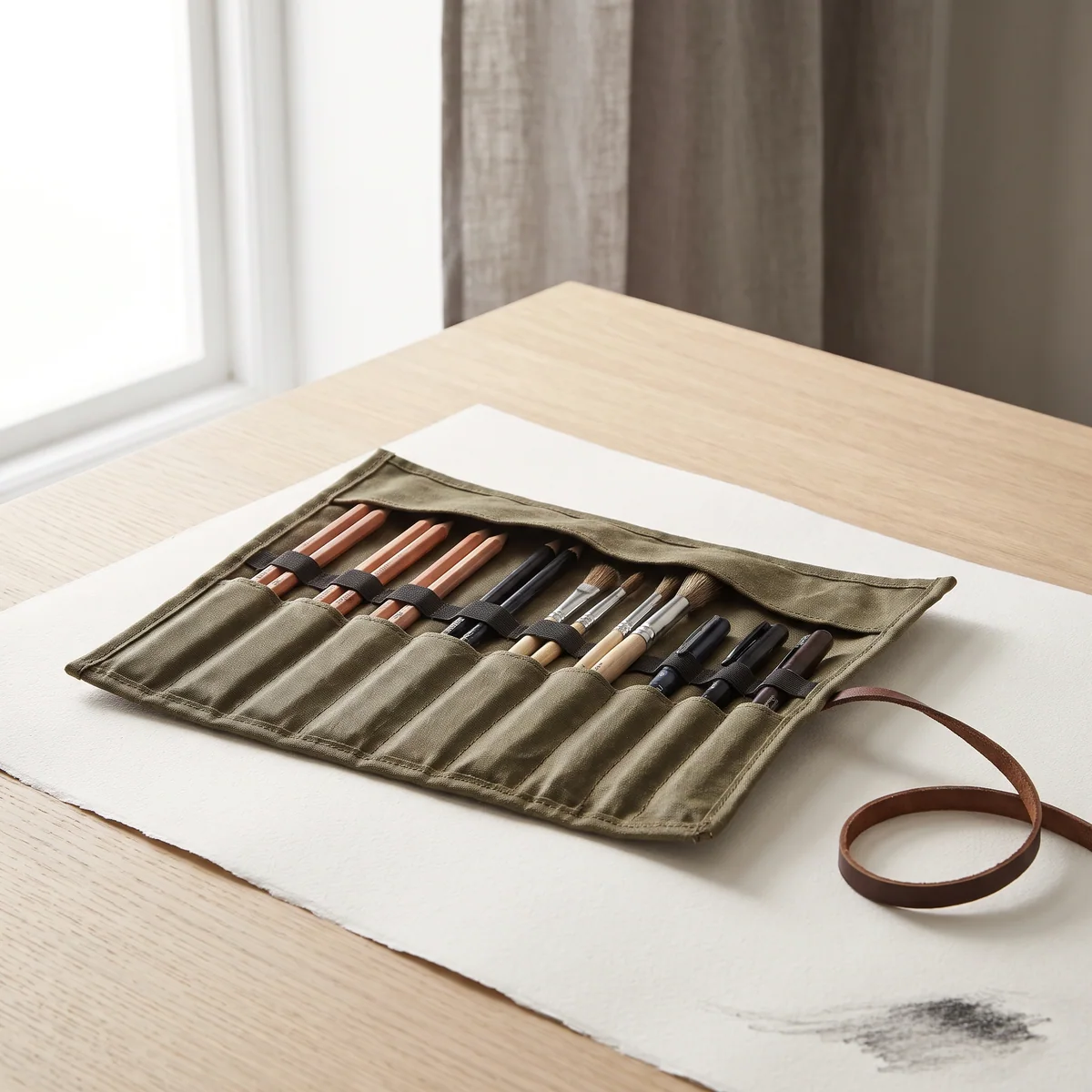
Our rolls, pouches and satchels are 18 oz cotton duck, waxed so light rain beads off. Waxed canvas creases, lightens at the folds and darkens with handling. That is the wax moving, not damage, and a fresh coat every year or so restores it.
Leather is vegetable tanned, which darkens to a deep tan with light and use. Hardware is solid brass.
Care, briefly
Store paper flat and dry. Keep pencils in a tin or roll. Rinse brushes and dry them flat. Leave paint tins open to dry before closing. Oil wood once a year. For more detail, size charts and brush sizes, read the size and care guide.